
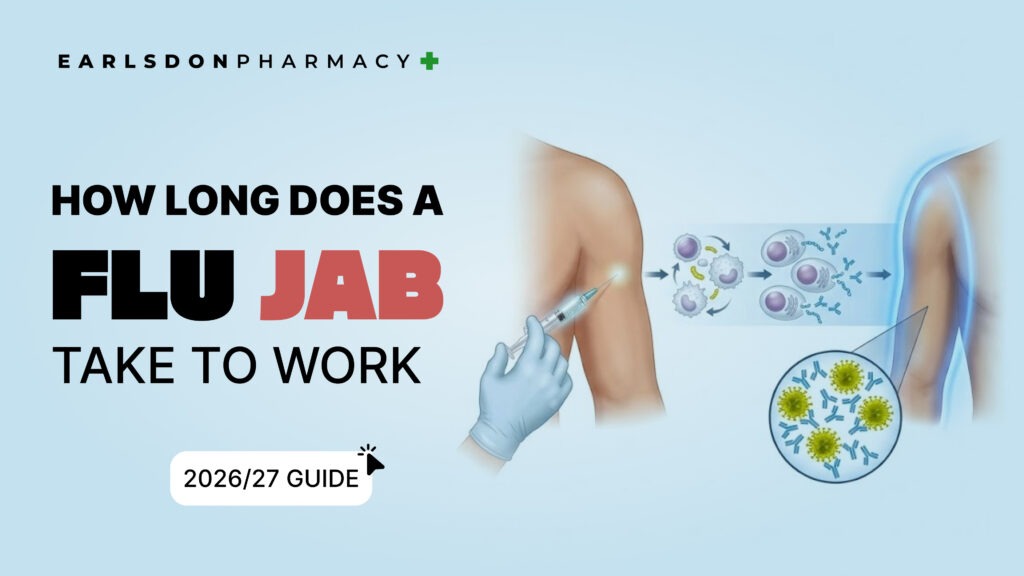
How Long Does a Flu Jab Take to Work? (2026/27 Guide)
You have booked your flu jab, but you may be wondering when it will actually protect you. Many people think it works the moment the needle goes in. In fact, your body needs some time to build its defences. For most adults, this takes about 14 days. That is why timing matters, and why it helps to book early in the autumn. Here is what you need to know.
In this simple guide, we explain how long a flu jab takes to work and what happens in your body during that time. We also answer whether you can still catch flu while you wait, and how to stay safe in the meantime. You will learn if the jab works more slowly for some people, and when the best time to get it is. Everything is written in plain words, so you can find your answer quickly and plan your appointment with confidence.
How Long Does a Flu Jab Take to Work?
A flu jab usually takes about 14 days to give you full protection. Some guides say 10 to 14 days, so it is safest to plan for the full two weeks. During this time, your body is learning how to fight the flu virus. You will not be fully protected on the day of your appointment, so it is best to get your jab before flu starts spreading in your area.
What Happens in Your Body Day by Day
On the day of your jab, the vaccine enters your arm. It contains harmless parts of the flu virus, so it cannot make you ill. Your immune system spots these parts and treats them as a threat.
Over the next few days, your body starts making antibodies. These are small proteins that help fight infection. You may notice a sore arm or feel a little tired during this time. This is normal and usually passes within one or two days.
By the end of the first week, your body is still working hard, but your protection is not at its best yet. By around day 14, your body has usually made enough antibodies to help fight the flu strains in the vaccine. Your body also keeps a memory of the virus, so it can react faster if it meets it again.
Can You Catch Flu During the First 14 Days?
Yes, you can. If you come into contact with the flu virus before your protection is ready, you may still get ill. This does not mean the jab has failed. It just means your body has not finished building its defences yet.
No flu vaccine works 100 percent of the time. You can also catch flu if a different strain is going around than the ones in the vaccine. The good news is that if you do get flu after having the jab, it is usually milder and does not last as long.
It can be hard to tell the difference between jab side effects and flu. Side effects are usually mild. They include a sore arm, a slight temperature, a headache, or aching muscles, and they go away in one or two days. Flu is usually stronger. It often starts suddenly with a high temperature, bad body aches, extreme tiredness, and a cough, and it lasts longer. Remember that the flu jab used in the UK cannot give you flu. If your symptoms are severe or not getting better, speak to your GP or call NHS 111.
How to Protect Yourself While You Wait
The first two weeks after your jab are a good time to take extra care. Wash your hands often with soap and water, especially before eating and after being in public places. Cover your mouth and nose with a tissue when you cough or sneeze, then throw the tissue away and wash your hands.
Try to keep your distance from people who are sick. If you can, avoid very crowded places when flu is spreading. Letting fresh air into your home and workplace can also help. If you feel unwell yourself, stay at home so you do not pass your illness on to others.
Does the Flu Jab Work Slower for Some People?
The 14-day rule is a good guide for most healthy adults. However, some people may not build as strong a response as others. Older adults and people with a weak immune system can fall into this group. The jab is still very important for them, because flu can be more serious for these people. Some older adults are offered a vaccine designed to give a stronger response, so ask your pharmacist or GP which one you will get.
Children are usually offered a nasal spray instead of an injection. The NHS mainly offers it to children aged 2 to 17. It is given as a quick spray in the nose and does not hurt. It also needs time to build protection, so the same advice applies. Most adults have the injection, as the nasal spray is not usually offered to adults on the NHS.
If you also need a COVID-19 vaccine, you can usually have it at the same appointment as your flu jab. You will normally get one injection in each arm. Ask the pharmacy or surgery when you book.
When Is the Best Time to Get Your Flu Jab?
The best time to get your flu jab is from September to early November. This gives your body time to build protection before flu is at its highest, which is usually in December and January. Having it too early may mean your protection starts to fade before the peak. Waiting too long may leave you open to flu before the jab has had time to work.
For the 2026/27 season, pregnant women and most children can have the NHS flu jab from 1 September 2026. Most other eligible adults, including everyone aged 65 and over, can have it from 1 October 2026. If you are not eligible for a free jab, some pharmacies offer a private one earlier, so you do not need to wait for these dates. You do not have to wait for an invite either. You can book your NHS jab yourself if you are eligible.
What If You Get It Late in the Season?
It is not too late if you have missed the ideal time. The NHS flu programme runs until the end of March, and flu can keep spreading into the new year. Having your jab in December or January can still give you good protection. Try to book as soon as you can, as stocks can run out later in the season.
How Long Does Flu Jab Protection Last?
One flu jab should protect you for the whole flu season. Over time, the antibodies in your body slowly go down, so protection fades as the months pass. The flu virus also changes from year to year. This means last year’s jab will not protect you well this year. This is why you need a new flu jab every autumn.
Frequently Asked Questions
Can I get flu from the flu jab?
No. The injected flu jab does not contain live flu virus, so it cannot give you flu. Some people feel a sore arm, a slight temperature, or aching muscles for a day or two. This shows that your immune system is responding.
How do I know if my flu jab is working?
There is no test or clear sign that tells you the jab is working. Having side effects, or not having them, does not show how well you are protected. Plan for full protection about 14 days after your jab.
Can I get a flu jab if I have a cold?
Yes, you can usually have the flu jab with a mild cold, such as a runny nose or a cough. If you have a high temperature or feel very unwell, wait until you feel better. If you are not sure, ask your pharmacist or GP.
Is it too late to get a flu jab in December?
No. Autumn is the best time, but the jab is still worth having in December or January. The NHS flu programme runs until the end of March.
Can I have the flu and COVID jab on the same day?
Yes. It is safe to have both at the same appointment. You will usually get one injection in each arm.
