
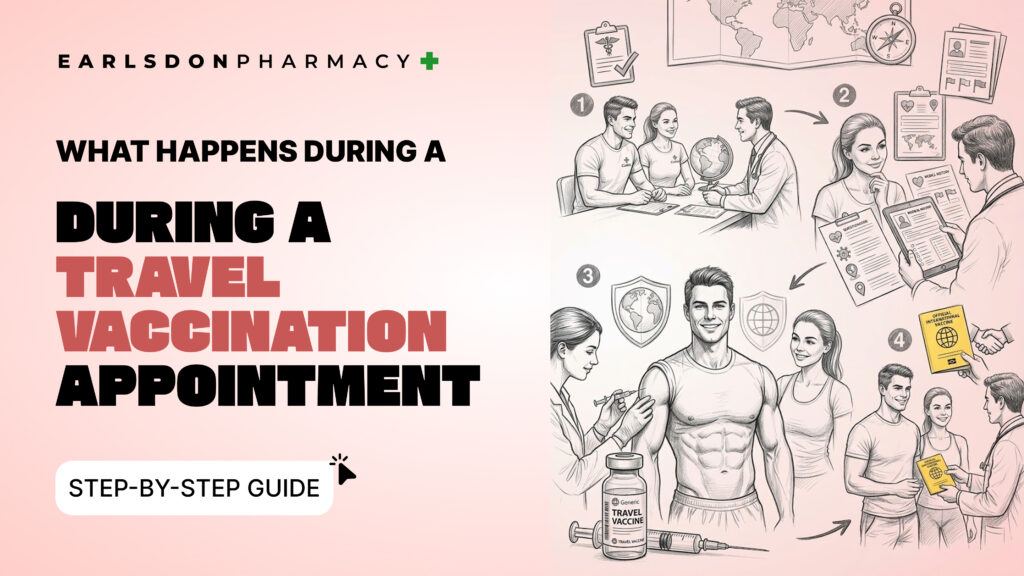
What Happens During a Travel Vaccination Appointment? (Step-by-Step Guide)
Booking your first travel clinic visit can feel a little scary. You may wonder what the nurse will ask, whether the jab will hurt, and how long it will take. These worries are normal, and knowing the steps can help you feel calm and ready before your trip.
So, what happens during a travel vaccination appointment? In short, a visit usually takes 20 to 40 minutes. The clinician asks about your trip and your health, explains which vaccines you need, and gives your jab. You then leave with a record of what you had and the dates for any extra doses. This guide walks you through each step, from what to bring to what to expect afterwards, in simple words. Whether you are heading to Asia, Africa or Saudi Arabia for Hajj or Umrah, the steps are much the same. Times can vary by clinic, so always check when you book.
How to Prepare for Your Travel Vaccination Appointment
A little planning helps your visit go smoothly. The clinician can give you better advice when they have the right details in front of them.
What to Bring
Try to bring the items in the table below. If you forget something, do not worry. The clinician can still help you.
| What to bring | Why it helps |
| Passport or trip dates | Shows where you are going and for how long |
| Vaccine records or NHS App | Stops you from having a vaccine you already have |
| List of your medicines | Some medicines can affect which vaccines are safe |
| Notes on your planned activities | Hiking, camping or city breaks carry different risks |
| Details of any allergies | Keeps your jab safe for you |
When to Book
Try to book 6 to 8 weeks before you travel. Some vaccines need more than one dose, and your body needs time to build protection. If your trip is close, still book. Even one dose can give you some protection.
What Happens During a Travel Vaccination Appointment, Step by Step
Every clinic works a little differently, but most visits follow the five steps below.
Step 1: Questions About Your Trip
First, the clinician asks about your travel plans. They want to know where you are going, how long you will stay, and where you will sleep. They may also ask what you plan to do. A beach holiday, a village stay and a jungle trek each carry different health risks. Your answers help the clinician pick the right advice for you.
Step 2: Your Health and Vaccine History Check
Next, the clinician asks about your health. They will ask about allergies, illnesses and any medicines you take. They will also check which vaccines you have already had. This step keeps you safe and stops you from getting jabs you do not need. Tell the clinician if you are pregnant, trying for a baby, or feeling unwell.
Step 3: Your Vaccine and Health Plan
Now the clinician explains what you need. They may suggest vaccines for illnesses such as hepatitis A or typhoid. If you are going to a malaria area, they will talk about malaria tablets. Remember that malaria cannot be stopped by a vaccine. You also get simple advice on safe food and water, and on how to avoid mosquito bites. Ask questions at this point if anything is unclear.
Step 4: Getting Your Vaccine
Most travel vaccines are given as an injection in the upper arm. The clinician cleans the skin, gives the jab and covers the spot with a small plaster. The jab itself only takes a few seconds. Most people say it feels like a quick pinch or a dull ache. Some vaccines, such as cholera, are taken by mouth instead.
Step 5: Your Vaccine Record and Next Dates
Finally, you get a record of the vaccines you had. If you had a yellow fever vaccine, you will also get an official certificate, which some countries ask to see at the border. If you need more doses, the clinician will give you the dates. Keep your record safe, and take a photo of it as a backup.
How Long Does a Travel Vaccination Appointment Take?
A first visit often takes 20 to 40 minutes, because the clinician reviews your whole trip. The jab is the shortest part. Most of the time is spent on questions and advice.
| Visit type | Usual time |
| First visit | About 20 to 40 minutes |
| Follow-up dose visit | Usually shorter, as no full trip review is needed |
| Yellow fever visit | May take longer because of the certificate, and it must be given at an approved centre |
Can You Have More Than One Vaccine in One Visit?
Often, yes. Many travellers get two or three vaccines in the same visit, which saves time. The clinician will plan the best schedule for your trip. Some vaccines need a gap between them, so you may need a second visit. Always tell the clinician if you have had any vaccine in the last few weeks.
What Happens After Your Vaccination?
Most people feel fine after a travel vaccine. Some feel a little tired or sore for a day or two. Here is what to expect.
Common Side Effects
| Mild and common | Get medical help if |
| Sore or red arm | You have trouble breathing |
| Feeling tired | Your face, lips or throat swell |
| Mild fever | You get a rash all over your body |
| Headache | You faint, or your symptoms keep getting worse |
Mild side effects usually go away in a few days. If you feel very unwell, call NHS 111. If you have serious trouble breathing or your throat swells, call 999 straight away.
When Are You Fully Protected?
Protection does not start right away. Here are some examples.
| Vaccine | When protection starts |
| Hepatitis A | About 2 weeks after the first dose |
| Typhoid (injection) | About 2 weeks after the jab |
| Meningitis ACWY | About 2 to 3 weeks after the jab |
| Yellow fever | Certificate is valid 10 days after the jab |
Some vaccines, like rabies, need three doses over three to four weeks. This is one more reason to book early.
Extra Care for Children, Pregnancy and Needle Fear
Some people need a little extra care at the clinic.
For children, the clinician checks if each vaccine is safe for their age. Some vaccines are not suitable for very young children, and some doses are different. Bring your child’s vaccine record. A favourite toy or a cuddle can also help them stay calm.
If you are pregnant or trying for a baby, tell the clinician before any jab. Some vaccines are not safe during pregnancy, and the clinician will choose the safest option for you. The same is true if you have a high fever or feel very unwell. The clinician may ask you to come back on another day.
If you are afraid of needles, say so at the start. Many people feel this way. You can sit or lie down, look away and take slow, deep breaths. The clinician can give you time and talk you through each step.
Questions to Ask Your Travel Clinician
You can ask anything during your visit. Good questions include whether you need a certificate for your trip, when you need your next dose, and which side effects to watch for. You can also ask what to do if you feel unwell while abroad, and whether your vaccines will cover future trips. Writing your questions down before you go can help.
Travel Vaccination Appointments at Earlsdon Pharmacy, Coventry
At Earlsdon Pharmacy, our team will check your trip and past vaccines, then explain what you need in clear, simple words. We can also help if you are travelling for Hajj or Umrah and need the Meningitis ACWY vaccine. To see the costs, read our guide: How Much Do Travel Vaccinations Cost in the UK?
Find us at 19-21 Earlsdon Street, Coventry, CV5 6EP. You can also call us on 02476714834.
| Day | Opening hours |
| Monday to Friday | 8:30am to 6:30pm |
| Saturday | 9:00am to 5:30pm |
| Sunday | Closed |
Frequently Asked Questions
How long does a travel clinic appointment take?
A first visit usually takes 20 to 40 minutes. Most of this time is spent on questions and advice. The jab itself only takes a few seconds. Follow-up visits for extra doses are often shorter.
Do I need a GP referral?
No. You can book directly with a pharmacy or private travel clinic. You do not need a referral from your GP. If you want to check for free NHS travel vaccines, you can also ask your GP surgery.
Does a travel vaccine hurt?
Most people feel a quick pinch and then a sore arm for a day or two. The pain is usually mild. If you are nervous, tell the clinician. They can help you feel calm.
Can I have several vaccines at once?
Often, yes. Many travel vaccines can be given on the same day. Some need a gap between them. The clinician will plan the best schedule for your trip.
Can I get vaccinated if I have a cold or fever?
A mild cold is often fine. If you have a high fever or feel very unwell, the clinician may ask you to wait. Always tell them how you feel before the jab.
Can I get a travel vaccine at short notice?
Often, yes. Many pharmacies can offer quick appointments, and even one dose can give some protection. Some vaccines, like yellow fever, may need extra time or an approved centre, so call early.
Conclusion
A travel vaccination appointment is quick and simple. You answer a few questions, get clear advice, have your jab and leave with your record. Bring your vaccine history and your trip details, and ask anything you are unsure about. Ready to get protected before you travel? Book your appointment at Earlsdon Pharmacy today.
