
How Does the Flu Vaccine Work? A Complete Guide
Every year in autumn, millions of people get a flu shot. But not everyone knows what happens inside the body after the shot. The flu vaccine is one of the easiest ways to stay safe from the flu. Still, many people wonder how it works, how long it takes to start working, and if it is safe.
In this guide, we will explain how the flu vaccine works in your body. We will also explain why you need a new shot every year, and who should get one. You will learn about the different types of flu vaccines, possible side effects, and answers to common questions. By the end, you will understand this yearly vaccine in simple terms.
What Is the Flu Vaccine and Why Do You Need It
The flu vaccine is a yearly shot, or nasal spray, that trains your immune system to recognise and fight the flu virus. It is one of the simplest and most effective tools available for lowering the risk of serious illness from influenza. Before looking at how it works, it helps to understand what the flu actually is and why protection matters.
What is influenza?
Influenza, also called flu, is a virus. It infects your nose, throat, and lungs. It spreads through the air when someone coughs, sneezes, or talks near you. It can also spread if you touch a surface with the virus on it, then touch your face. Common symptoms are a sudden fever, body aches, tiredness, a sore throat, and a cough. Most people get better in a week or two. But flu can sometimes cause serious problems, like pneumonia. This is more likely in young children, older adults, and people with certain health issues.
Why the flu vaccine matters every year
The flu virus keeps changing. This means last year’s flu shot does not fully protect you this year. Getting a new shot each year helps your body learn to fight the new virus types. It also protects people around you. This includes older family members, babies, and people with weak immune systems. If you get the shot, you are less likely to catch the flu and pass it on to others.
How Does the Flu Vaccine Work in Your Body
Once the vaccine enters your body, it sets off a carefully timed chain of events inside your immune system. Understanding this process makes it easier to see why the vaccine is safe, why it takes time to work, and why it cannot give you the flu. Here is a look at what actually happens, step by step.
The science behind it inactivated vs weakened virus
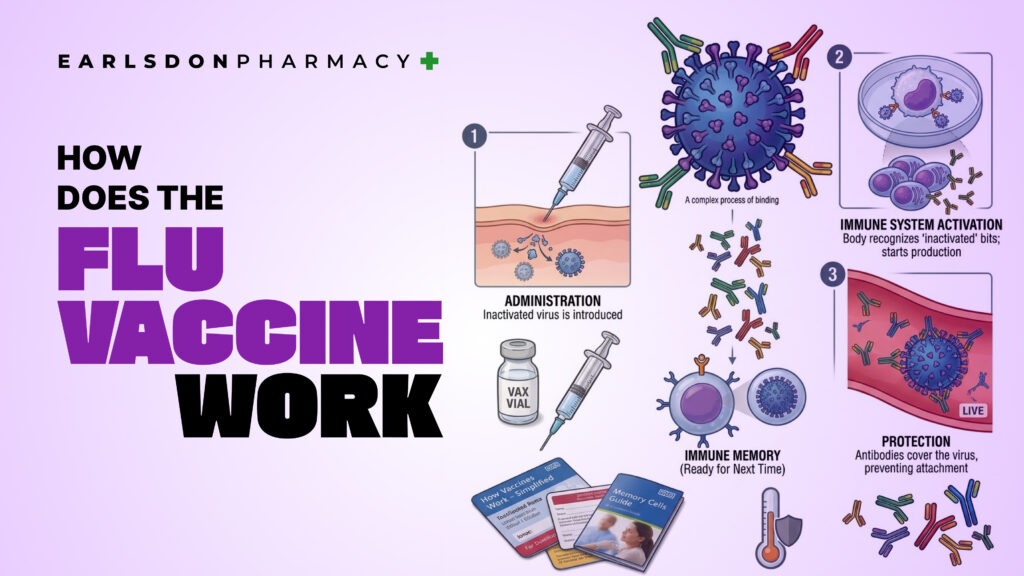
Most flu shots have a dead form of the flu virus, or just small parts of it. These cannot make you sick. Some vaccines, usually given as a nose spray to kids, have a weak, live form of the virus. This weak form is too weak to make a healthy child sick. But it is strong enough to teach the body how to fight the real virus.
How your immune system recognises the virus
When the vaccine goes into your body, your immune system notices it. Even though the vaccine cannot make you sick, your body treats it like a real threat. Special cells look at the vaccine and find markers on it called antigens. This tells your immune system that it needs to fight this type of flu. This starts a chain of events that builds your protection over the next few days.
How antibodies are produced (step-by-step immune response)
Once your immune system finds the flu antigens, it turns on cells called B-cells. These cells start making proteins called antibodies. Each antibody is made to match one specific flu type, like a key made for one lock. Over the next one to two weeks, your body makes enough antibodies to fight off the real flu virus fast. This stops the infection early, or makes it much milder if you do get sick.
Memory cells how your body “remembers” the flu strain
Your immune system also makes memory cells. These cells store information about the flu types in your vaccine. They stay in your body long after your antibody levels start to drop. This means your body can react faster if it meets the same flu virus again. This is one reason why vaccinated people who still catch the flu usually have milder symptoms.
Why the flu vaccine cannot give you the flu
The flu shot cannot give you the flu. This is because the virus in the shot is either dead or broken into small pieces. These cannot cause an infection. Even the nose spray, which has a live virus, is made weak on purpose. It can only survive in the cool air inside your nose. It cannot spread to your lungs or make you sick. If you feel tired or have a mild fever after the shot, this just means your immune system is working. It is not the flu.
How Long Does It Take for the Flu Vaccine to Work
The flu vaccine does not protect you the moment you get it. Your body needs time to build up its defences after the shot. Knowing this timeline helps you plan when to get vaccinated and understand what to expect in the days that follow.
The 10–14 day immunity window
After your flu shot, it usually takes 10 to 14 days for your body to build full protection. During this time, your immune system is quietly working. It is making antibodies and memory cells based on the vaccine. This is why doctors say to get your flu shot early, in September or October. This way, you are protected before flu season peaks.
What happens if you’re exposed to flu during this window
If you are around the flu virus during this two-week period, you could still catch it. This does not mean the vaccine failed. It just means your body had not finished building protection yet. After the two weeks pass and your antibodies are ready, your risk of catching the flu, or getting very sick from it, drops a lot.
Types of Flu Vaccines
Not everyone receives exactly the same flu vaccine. Different versions are designed for different ages, health needs, and allergies. Here is a look at the main types available and how they differ from one another.
Inactivated flu vaccine (injection)
The inactivated flu vaccine is the most common type for adults. It is given as a shot, usually in the upper arm. It has dead flu virus particles, so it cannot cause an infection. This makes it safe even for people with weak immune systems. Most people aged 18 and older get this type.
Live attenuated flu vaccine (nasal spray for children)
This vaccine is given as a quick spray up each nostril. It does not hurt. It is mostly given to children. It has a weak, live form of the flu virus. This is strong enough to build protection, but too weak to make most healthy kids sick. It is not right for every child, though. Some kids with health conditions will need the shot instead. A doctor or pharmacist will check which type is best.
Cell-based & recombinant vaccines (egg-free options)
Some people have egg allergies or want a different type of vaccine. For them, cell-based and recombinant flu vaccines are options. Older vaccines are grown using eggs. These newer types are made using cell cultures or lab-made proteins instead. No eggs are used. Both types work just as well as regular vaccines and are safe for most people.
Which type is right for you or your child
The best type of flu vaccine depends on your age, health, and any allergies. Most healthy adults get the regular shot. Most children between two and a certain age get the nose spray instead. Your doctor or pharmacist will help pick the right one for you or your child based on your health history.
H2: Why You Need a Flu Vaccine Every Year
Unlike some vaccines that offer long-lasting protection, the flu shot needs to be repeated every year. This is not just routine — it is directly tied to how the flu virus behaves and how scientists respond to those changes each season.
H3: Antigenic drift how flu viruses constantly change
Flu viruses change all the time. This natural process is called antigenic drift. Small changes build up in the virus over time. Because of this, the antibodies from last year’s shot may not fully match this year’s flu virus. This is why old protection fades and becomes less useful each flu season.
How scientists decide each year’s vaccine strains (WHO updates)
Every year, scientists around the world, including the World Health Organization, study flu cases from different countries. They try to guess which flu types will spread next. Based on this, vaccine makers update the shot to match these expected types. This work starts months before flu season. This process is why the flu vaccine keeps working well, even as the virus keeps changing.
Who Should Get the Flu Vaccine
While the flu vaccine is recommended for most people, it is especially important for certain groups who face a higher risk of serious illness. Here is who should prioritise getting vaccinated and what makes them eligible.
High-risk groups (elderly, pregnant, long-term conditions)
The flu vaccine is very important for people who are more likely to get seriously ill from flu. This includes adults aged 65 and older, pregnant women, young children, and anyone with a long-term health problem affecting the heart, lungs, kidneys, liver, or immune system. People who live in care homes, work in healthcare, or care for someone vulnerable should also get vaccinated every year.
Eligible health conditions list
You may be eligible for the flu vaccine from six months of age if you have any of these conditions: long-term breathing problems like asthma, long-term heart disease, long-term kidney disease, long-term liver disease, long-term nerve or brain conditions, diabetes, or a weak immune system. People of any age are also eligible if they have a poorly working spleen or severe obesity (Class III).
Free NHS vaccine eligibility vs private options
If you are in one of the groups above, you can usually get your flu shot for free through the NHS. You can get it at your GP surgery, local pharmacy, or maternity service. If you don’t qualify for the free shot but still want one, many pharmacies offer a private flu vaccine at a low cost. Either way, it’s best to check early and book your appointment as soon as shots are available.
Flu Vaccine Safety and Effectiveness
Before any flu vaccine reaches the public, it goes through rigorous testing and ongoing monitoring. This section looks at how that safety is ensured, and how well the vaccine actually performs each season.
How flu vaccines are tested and monitored (MHRA / regulatory standards)
Before a flu vaccine can be used, it goes through strict testing. This checks that it is safe, high quality, and works well. In the UK, this is overseen by the Medicines and Healthcare products Regulatory Agency (MHRA). Even after a vaccine is approved, the MHRA keeps checking it through testing and safety reviews. Millions of doses are given safely every year, and any unusual problems are tracked closely.
How effective is the flu vaccine? (Real statistics)
How well the flu vaccine works can change year to year. This depends on how closely the vaccine matches the flu virus spreading that year. On average, the vaccine lowers your risk of getting flu by about 40 to 60 percent when the match is good. It also lowers your risk of hospital stays, even in years when the match is not perfect. Even if you still catch the flu after your shot, your symptoms will likely be milder and shorter.
Possible Side Effects of the Flu Vaccine
Like any vaccine, the flu shot can cause side effects, though most people notice little to nothing unusual. Knowing what is normal, and what needs medical attention, can help you feel more prepared going into your appointment.
Common side effects (mild, short-term)
Most people have little to no side effects after a flu shot. If side effects do happen, they are usually mild and go away quickly. Common ones include soreness or redness where the shot was given, a slight fever, tiredness, and mild body aches. These usually go away within one to two days. They simply show that your immune system is doing its job.
Rare side effects & allergic responses
Serious side effects from the flu vaccine are very rare. Still, it’s good to know about them. In very rare cases, some people have reported a condition called Guillain-Barré syndrome after the shot. A clear link has not been proven, and the risk is extremely low. Severe allergic reactions, called anaphylaxis, are also rare. Healthcare workers who give the vaccine are trained to spot and treat these reactions right away.
When to seek medical help
Mild side effects like soreness or tiredness usually go away on their own in a day or two. No treatment is needed. But if you or your child gets a high fever of 39°C or above, has trouble breathing, or has swelling in the face or throat after the shot, get medical help right away. Call your GP or emergency services. Always trust your gut if something feels wrong.
Who Should Not Get the Flu Vaccine
The flu vaccine is safe for the vast majority of people, but there are a small number of exceptions. It is worth knowing these in advance so you and your doctor or pharmacist can plan your appointment accordingly.
Severe allergies & egg allergy guidelines
Most people can safely get the flu vaccine. But there are a few exceptions. You should not get the flu shot if you have had a severe allergic reaction (anaphylaxis) to a flu vaccine or any of its ingredients before. People with an egg allergy can usually still get a flu shot safely, since egg-free options like cell-based or recombinant vaccines are available. Just tell your pharmacist or doctor about your allergy first.
Precautions (illness, fever)
If you feel unwell or have a high fever on the day of your appointment, it’s best to wait until you feel better before getting the shot. This helps make sure your body can respond to the vaccine properly, without mixing up vaccine side effects with symptoms of your current illness. Your pharmacist or doctor can help you reschedule if you’re not sure what to do.
Can You Get the Flu Vaccine With Other Vaccines?
Flu season often overlaps with other vaccination needs, so many people wonder whether appointments can be combined. Here is what you should know about getting the flu shot alongside other common vaccines.
Co-administration with COVID-19, RSV, or shingles vaccines
Yes, in most cases you can get the flu vaccine at the same time as other vaccines, like the COVID-19 or shingles vaccine. Each one is given in a different arm. This makes it easier to protect yourself against several illnesses in one visit, without making either vaccine less effective. The flu vaccine is not usually given at the same time as the RSV vaccine. But your doctor may suggest doing both together if there’s a good medical reason.
Frequently Asked Questions
Still have questions about the flu vaccine? Below are answers to some of the most common things people ask before and after getting their shot.
How much does the private flu jab cost?
Prices for a private flu shot are different at each pharmacy. They usually cost around fifteen to twenty-five pounds. If you qualify for the free NHS flu vaccine, you won’t need to pay. You can book through your GP or a pharmacy that offers it.
Can I get the flu jab if I’m pregnant or breastfeeding?
Yes. The flu vaccine is safe and recommended during pregnancy. It protects both you and your baby from serious flu problems. It is also safe to get the flu shot while breastfeeding. It will not harm your milk or your baby.
Can I drink alcohol after the flu jab?
Having a small amount of alcohol after your flu shot is usually fine. It will not stop the vaccine from working. But it’s a good idea to avoid heavy drinking for a day or two. Too much alcohol can weaken your immune response for a short time and may make mild side effects, like tiredness or headache, feel worse.
How do I book my flu vaccine appointment?
You can usually book your flu shot online through your GP surgery, the NHS App, or a local pharmacy that offers it. Many pharmacies also let you walk in without an appointment during flu season, if that works better for you.
Can my child get the nasal spray vaccine?
Most children aged two and older can get the nose spray flu vaccine. It is quick and painless, given as a spray in each nostril. But it is not right for every child. Kids with certain health conditions or weak immune systems may need the regular shot instead.
